Storms are one of the leading causes of sudden tree failure. Heavy rain, strong winds, snow,
and saturated soil can weaken even healthy-looking trees. Unfortunately, many hazardous trees
don’t fall immediately — they fail days or weeks later, often without warning.
Knowing how to identify storm-related tree damage can help you protect your home, your family,
and your property before an accident happens.
Why Storm-Damaged Trees Are So Dangerous
After a storm, trees may look stable while hiding serious structural problems. Wind and water
can weaken roots, crack trunks, and stress branches beyond their limits. These hidden issues
increase the risk of delayed failure, especially during the next storm or even on a calm day.
This is why post-storm tree inspections are so important.
Top Warning Signs a Tree May Be Hazardous After a Storm
1. Leaning Trees That Weren’t Leaning Before
If a tree suddenly leans after a storm, it’s a major red flag. This often indicates root failure,
soil saturation, or underground root damage. Even a slight new lean can worsen quickly.
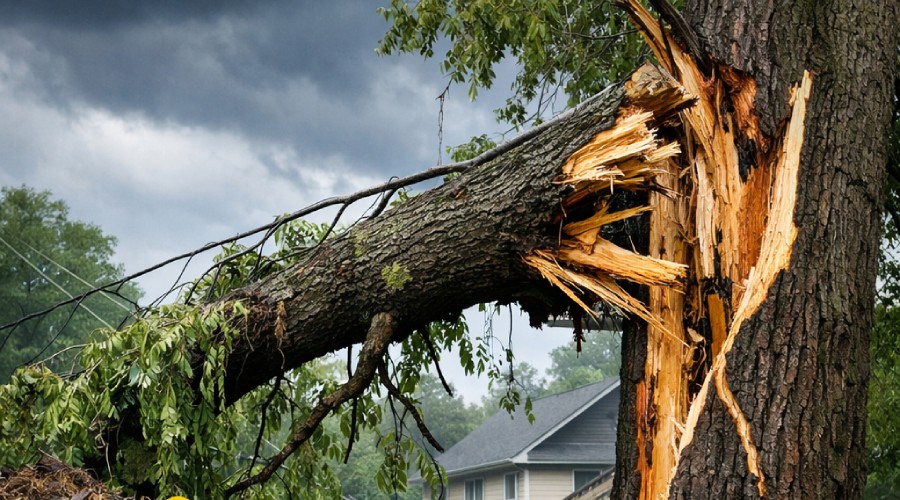
2. Cracks or Splits in the Trunk
Vertical cracks, splitting bark, or visible separation in the trunk are signs of serious structural
weakness. These trees can fail without much notice, especially under additional stress.
3. Uprooted or Lifting Soil Around the Base
Soil heaving, raised roots, or exposed root plates indicate that the tree has lost its anchor.
Trees in this condition are extremely unstable and should be evaluated immediately.
4. Hanging or Broken Limbs
Broken branches lodged in the canopy or hanging over walkways, driveways, or roofs are among
the most common post-storm hazards. These limbs can fall at any time, even days later.
5. Trees Near Homes or Power Lines
Storm damage becomes especially dangerous when trees are close to houses, garages, fences,
vehicles, or power lines. Even minor damage in these locations can lead to major property loss
or serious safety risks.
6. Fungal Growth or Hollow Areas
After storms, internal decay may become visible through mushrooms, fungal growth,
hollow sections in the trunk, or soft and crumbling wood. These signs indicate long-term
structural weakness that storms often accelerate.
Why You Shouldn’t Ignore “Minor” Storm Damage
Many homeowners wait because the tree didn’t fall right away. Unfortunately, storm-damaged
trees often fail later due to weakened root systems, internal cracking, or delayed structural
collapse.
Proactive assessment is far safer — and often far less expensive — than emergency removal
after damage occurs.
What a Professional Hazardous Tree Assessment Looks For
A professional tree assessment evaluates root stability, soil conditions, trunk integrity,
internal decay, branch structure, weight distribution, likelihood of failure, and potential
targets such as homes, people, or vehicles.
Based on this evaluation, recommendations may include pruning, stabilization, or full removal.
Can Storm-Damaged Trees Be Saved?
Sometimes, yes. Not all damaged trees need removal. Depending on severity, solutions may include
selective pruning, weight reduction, cabling or bracing, or ongoing monitoring.
However, when risk is high, removal is often the safest option.
When to Call a Professional Immediately
You should schedule an inspection right away if:
- a tree is leaning toward your home
- roots are lifting from the ground
- large limbs are broken or hanging
- the tree was struck by lightning
- the tree is near power lines
These situations should never be handled as DIY projects.
Final Thoughts
Storms can turn safe trees into serious hazards without obvious warning signs. A professional
tree assessment after severe weather is one of the best ways to protect your property and
avoid unexpected emergencies.
Being proactive today can prevent costly damage tomorrow.
Professional Storm & Hazardous Tree Inspections in Snohomish County
Western Hemlock Tree Services provides hazardous tree assessments, post-storm inspections,
emergency tree removal, storm damage pruning, and crane-assisted tree removal.
Western Hemlock Tree Services
Snohomish County, WA
Phone: +1 425-374-8996
Email: claudia@westernhemlockts.com
Website: Contact Us
If you’re unsure about a tree after a storm, it’s always better to have it checked.