After a major windstorm, snowstorm, or heavy rain, trees can become unstable even if they are still standing.
Some hazards are obvious — broken limbs and cracked trunks — but others are hidden beneath the soil or canopy,
waiting to fail later. Understanding the signs of a dangerous storm-damaged tree is essential for keeping your
property and family safe.
In this guide, we explain how to identify high-risk trees, what warning signs to look for after severe weather,
and when it’s time to call a certified arborist for emergency service or stabilization.
These steps can prevent costly property damage — or even injury — before the tree collapses unexpectedly.
Why Storm-Damaged Trees Are So Dangerous
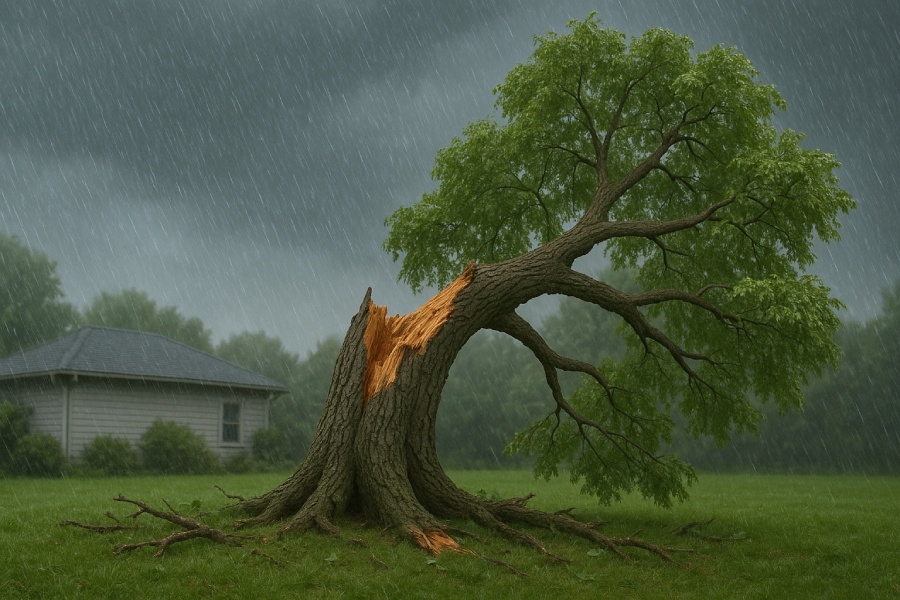
A tree doesn’t need to fall completely to be dangerous. Partial failures are often the most hazardous:
a cracked branch, a leaning trunk, or a shifting root plate can fail days or weeks after the storm.
Many homeowners assume that a vertical tree is a safe tree — but internal stress can be building silently.
High winds can twist and split fibers, while saturated soil can loosen root anchoring.
A tree may look stable from the outside but still be seconds away from collapse.
Common Signs a Storm-Damaged Tree Is Unsafe
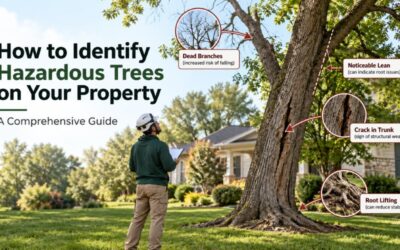
- Leaning or newly tilted trunk — especially if the lean was not present before the storm.
- Uprooted or lifting soil around the base of the tree.
- Cracks or splits in the trunk or major limbs.
- Hanging or partially detached branches (widow-makers).
- Broken canopy structure where major limbs have snapped.
- Twisted branches caused by wind stress.
- Bark peeling or shearing at impact points.
- Roots exposed or visibly shifting.
If any of these are present, the tree should be inspected immediately by a certified arborist.
DIY removal can be extremely dangerous — a stressed tree can pivot, roll, or collapse without warning.
The Hidden Dangers Homeowners Often Miss
Not all hazards are obvious. The most dangerous trees after a storm are often the ones still standing,
but unstable internally. Some warning signs are easy to overlook:
- Branches that appear intact but are cracked high in the canopy.
- Tree is leaning slightly but roots are lifting on the opposite side.
- Wind-thrown root systems that have begun to re-settle but remain unstable.
- Hollow sounds when tapping the trunk — indicating internal decay.
- Canopy weight imbalance increasing the chance of collapse.
What To Do Immediately After a Storm
- Stay at a safe distance. Don’t walk under a damaged tree or hanging limbs.
- Check for power lines. If the tree is touching electrical lines, treat it as live — call utilities immediately.
- Do not cut limbs yourself. Improper cuts can release stored tension violently.
- Document visible damage for insurance purposes.
- Call a licensed arborist for hazard assessment or stabilization.
When Removal Is Necessary vs When a Tree Can Be Saved
Not every damaged tree must be removed. In many cases, cabling, bracing,
or selective pruning can stabilize the structure and help the tree recover.
A tree typically needs removal if:
- The trunk is split or structurally compromised.
- The root system has failed or fully uprooted.
- There is significant lean combined with soil movement.
- Major limbs forming the main canopy have broken.
A tree may be saved if:
- Damage is limited to minor or mid-level branches.
- The root system remains intact and anchored.
- The tree shows strong recovery potential with pruning.
- Cabling or bracing can redistribute canopy stress.
Tree Services Commonly Used After a Storm
- Emergency tree removal
- Fallen tree cleanup
- Crane-assisted removals for large or dangerous trees
- Broken limb removal
- Tree stabilization (cabling, bracing, anchoring)
- Debris and brush cleanup
- Storm damage pruning and canopy recovery
- Hazard inspections and risk reports
Why Professional Assessment Matters
Storm-damaged trees are unpredictable. Even if they look stable,
internal fractures, twisted fibers, or root shifts can turn them
into a major safety hazard. A certified arborist understands how
the tree’s structure distributes weight and stress — something
the untrained eye can’t reliably determine.
Local Safety Tip for Snohomish County Homeowners
Because our region experiences heavy winter winds and saturated soil,
many storm failures are root-related rather than canopy-related.
If the ground around a tree appears raised, soft, or cracked, the tree
may be in active failure — even if still upright.
Frequently Asked Questions
How soon should a damaged tree be inspected after a storm?
As soon as possible. Waiting increases the risk of delayed collapse.
Can a leaning tree stand back up on its own?
No — once the root plate shifts, natural correction is unlikely. Stabilization is required.
Is storm-damaged tree work covered by insurance?
In most wind or storm cases, yes. Documentation helps speed up claims.
Need a Storm-Damaged Tree Inspected?
Western Hemlock Tree Services provides 24/7 emergency response, hazard inspection,
stabilization, and cleanup throughout Snohomish County. If a tree on your property
may be unstable, don’t wait — early intervention can prevent removal or property damage.
Call now: +1 425-374-8996