Western Hemlock Tree & Stump Service
Tree service FAQs
for Snohomish County.
Find practical answers about tree removal, pruning, stump grinding, and storm cleanup for homes and properties in Snohomish County and nearby communities.
Your tree care questions, answered
Find your answer
Browse a topic or search the questions and answers below.
Search by a word or phrase. Results update as you type.
Services & estimates
Start with service coverage, pricing, and what to share when you request a quote.
What tree services does Western Hemlock provide?
Western Hemlock Tree & Stump Service provides tree pruning, tree removal, stump grinding and removal, storm cleanup, and tree cabling and bracing. Arborist evaluations are also available. Browse our tree services or tell us about your property so we can discuss an appropriate scope of work.
Which areas do you serve?
We serve Snohomish County and surrounding Puget Sound communities, including Everett, Snohomish, Mill Creek, Bothell, Lake Stevens, Lynnwood, Mukilteo, Edmonds, Seattle, and Bellevue. Check our service areas and contact us with your address to confirm coverage and scheduling for your specific project.
Do you offer free tree-service estimates?
Yes. We offer free, no-obligation estimates for tree-service projects. Request a quote or call 425-374-8996 to describe the work. If you need a formal arborist report or another specialized assessment, ask about its scope and any separate fee before booking.
What information should I provide when requesting an estimate?
Share the property address, the work you have in mind, and the number of trees or stumps involved. Photos taken from a safe location can help us understand the setting. Mention narrow gates, slopes, nearby buildings, overhead wires, and any access restrictions so we can plan the next step.
Do you work year-round?
Yes. Tree care, removals, and storm-related work can be scheduled throughout the year. The right timing depends on the tree, the task, and site conditions. Pruning schedules may vary by species, while high winds, saturated ground, ice, or other unsafe conditions can affect when a crew can work.
How much does tree removal cost in Snohomish County?
Pricing depends on the tree's size and condition, the amount of work, equipment access, nearby structures, and how material will be handled. Crane access, stump work, and hauling can also change the scope. A property-specific estimate is more useful than a general price range; compare what each written quote includes.
Tree removal
Understand removal options, difficult access, and the approvals your project may need.
How do I know whether a tree needs removal?
Removal depends on the tree's health, structural condition, location, and the consequences if it fails. A tree with defects may have other management options, while some risks make removal appropriate. Arrange a tree assessment rather than deciding from appearance alone. Keep clear of a tree that appears unstable.
Can you remove a tree close to a house, fence, or driveway?
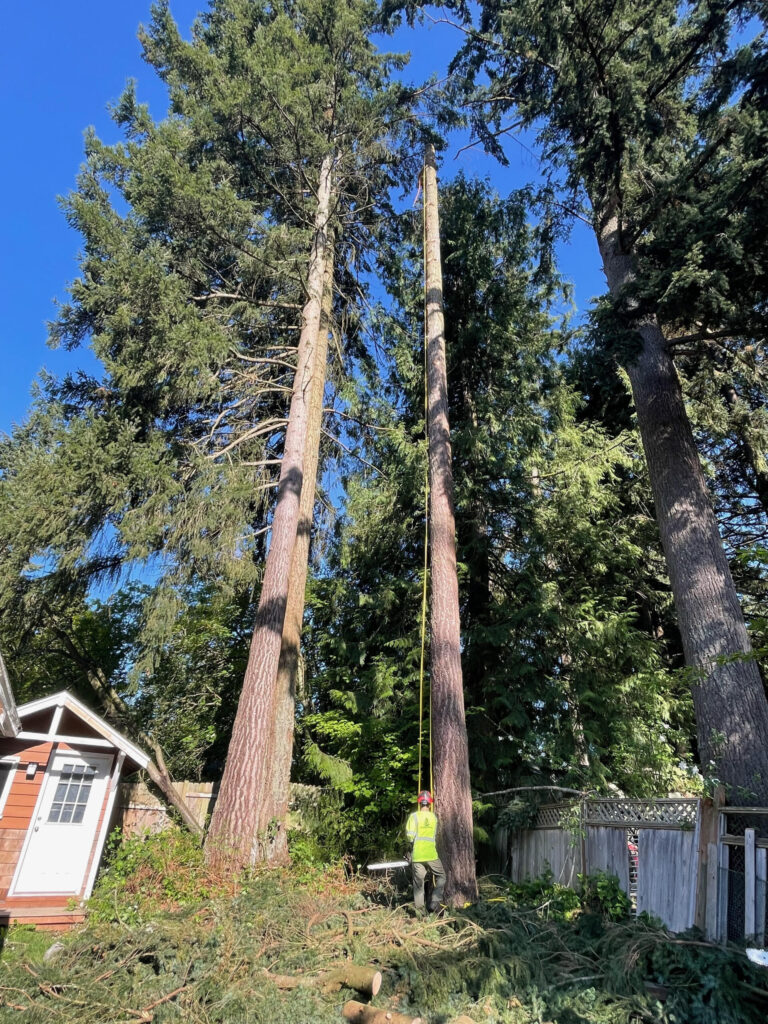
We assess removals near buildings and other obstacles before selecting equipment and a work method. Restricted spaces may require the tree to be dismantled in sections instead of felled in one piece. Tell us about structures, neighboring property, and overhead lines during the estimate so access and necessary coordination can be considered.
When might crane-assisted tree removal be needed?
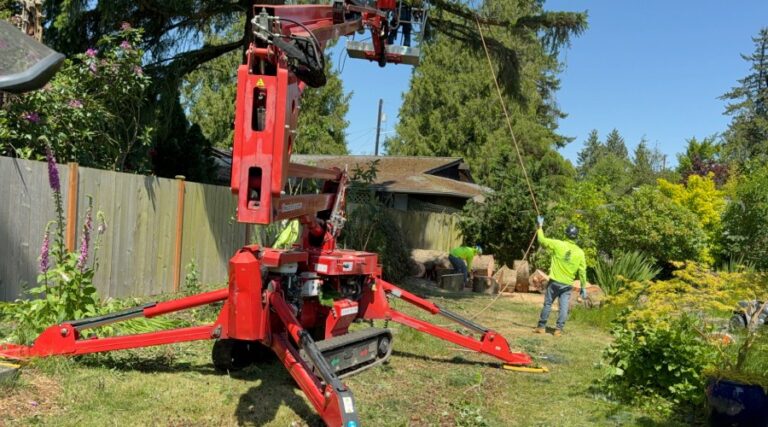
A crane may be considered for a large tree, difficult access, or a removal where sections need to be lifted over obstacles. It is not necessary for every project. Our crane-assisted removal planning considers the tree, equipment setup space, ground conditions, and nearby utilities before a method is selected.
Can you remove several trees or help with lot-clearing work?
Yes. We can discuss multiple-tree removal and clearing needs as part of a site assessment. Identify the trees you want considered and the intended use of the area. Development plans, retained trees, access, debris handling, and applicable approvals should be reviewed before the work is agreed upon.
Do I need a permit to remove a tree in Snohomish County?
Requirements depend on whether the property is inside a city or in unincorporated Snohomish County, along with tree protections and site conditions. HOA approval is a separate consideration. Confirm requirements before work with your jurisdiction, such as the City of Snohomish tree program or Snohomish County permitting. A mailing address alone does not establish jurisdiction.
Should a dead tree be removed right away?
A dead tree near people, buildings, roads, or utilities should be assessed promptly because deteriorating wood can create falling-branch or whole-tree hazards. Urgency depends on the tree and its surroundings. Avoid the area if branches are hanging or the tree is shifting, and contact us to discuss an assessment.
Pruning & trimming
Learn when pruning helps and how the right approach supports your tree's structure.
What is the difference between tree trimming and pruning?
People often use the terms interchangeably. Pruning describes selective branch removal for a defined purpose, such as structure, clearance, or removing deadwood. Trimming often refers to shaping or managing growth. The important question is which branches should be removed and why; our pruning services start with that goal.
When is the best time to prune trees in the Pacific Northwest?
The best time depends on the species, its condition, and the reason for pruning. Light removal of dead or weak branches is often possible throughout the year; larger pruning projects need more specific timing. Ask about the trees on your property instead of following one seasonal rule for every tree.
Is tree topping the same as crown reduction?
No. Topping removes large portions of a tree to stubs and can lead to decay and weak regrowth. Appropriate crown reduction uses selective cuts back to suitable branches. Ask about canopy reduction or other options; the International Society of Arboriculture's pruning guide explains why topping is harmful.
Can pruning improve sunlight, views, or clearance?
Selective pruning may improve clearance or open particular views, depending on the tree's form and condition. Removing too much live foliage can harm a tree, so the goal should be realistic and specific. Explain the window, walkway, roof, or view you want improved so we can discuss suitable options.
Do you prune fruit trees?
Yes. We offer fruit tree pruning. The approach depends on the type of fruit tree, its age, previous pruning, and your goals for size and structure. Tell us the species if you know it and whether the tree has been regularly maintained or needs a longer-term pruning plan.
How often should my trees be pruned?
There is no single interval that suits every tree. Young trees, mature trees, fruit trees, and trees near buildings have different needs. An assessment can help set a maintenance schedule. Request another review after significant storm damage, a change in growth, or new clearance concerns rather than pruning heavily on a fixed calendar.
Stump grinding
Plan for roots, wood chips, access, and what you want to do with the space next.
What is the difference between stump grinding and stump extraction?
Stump grinding breaks the stump into small pieces below the surrounding ground level. Extraction excavates the stump and a larger portion of its root mass, usually disturbing more soil. The right option depends on access and your future plans. Explore our stump removal and grinding services before deciding.
Does stump grinding remove all of the roots?
No. Grinding targets the stump and the portions of nearby roots reached by the machine. Roots beyond that area generally remain in the ground and decay over time. If roots conflict with a planned foundation, walkway, or planting area, explain those plans so any additional work can be evaluated separately.
How much does stump grinding cost?
Cost depends on stump diameter, the root flare, the number of stumps, equipment access, and the requested finish. Slopes, fences, rocks, and nearby utilities can also affect the work. Request an estimate and ask whether chip removal, backfill, and any additional root work are included.
How deep should a stump be ground?
The appropriate depth depends on how the area will be used and what is below ground. Lawn restoration, planting, and construction can require different preparation. Discuss the intended finish before work begins; a standard grinding job should not be assumed to prepare a site for foundations or remove every underground obstruction.
What happens to the wood chips and hole after grinding?
Grinding produces a mixture of wood chips and soil. Confirm whether the estimate includes leaving that material, removing excess chips, or adding soil afterward. Backfilling and lawn restoration should be specified separately when needed. The area may settle as remaining wood breaks down, so future leveling may be necessary.
Can I plant a new tree where the stump was removed?
A nearby new planting location is often preferable because old roots, wood debris, and settling can make the exact stump site difficult to reuse. If the same location is essential, discuss preparation before grinding. Iowa State Extension's replanting guidance explains these considerations and why the removed tree's condition also matters.
Arborists & tree health
Get help understanding warning signs, preservation options, and arborist reports.
Are ISA-certified arborists available?
Yes. ISA-certified arborists are available to provide evaluations, reports, and tree-care guidance through Western Hemlock. Mention whether you need general advice, a written report, or a specific type of assessment when contacting us. Learn more about our team, and confirm the assigned professional and assessment scope for your project.
What warning signs mean I should call an arborist?
New cracks, hanging branches, cavities, fungal growth near the base, a new lean, or soil movement around roots warrant attention. These signs do not automatically mean a tree must be removed, but they need professional evaluation. Stay away from an apparently unstable tree. See ISA guidance on tree hazards and risk.
Can a sick or declining tree be saved?
Sometimes. The first step is understanding the cause and extent of decline. Depending on the findings, recommendations may include changes to care, selective pruning, monitoring, or removal. Not every problem has a treatment, and recovery cannot be guaranteed. An assessment helps avoid choosing work based only on a single symptom.
Can cabling and bracing prevent a tree from falling?
Cabling and bracing may help support certain weak branches or stems when an arborist considers it appropriate. These systems cannot guarantee that a tree will not fail. Suitability depends on the defect, tree condition, and surroundings, and the support system needs follow-up inspection as the tree changes.
Can construction or damaged roots affect a tree's health?
Yes. Excavation, changes in soil level, and compaction can damage roots and affect a tree's condition or stability. Consult an arborist before digging or cutting substantial roots near a tree you want to keep. If work has already occurred, explain what changed and when so the assessment can consider that history.
Can you provide an arborist report for a permit or property decision?
Arborist reports are available. Tell us who will receive the report and share any required form, deadline, or assessment standard before booking. Requirements differ between a city permit application, property transaction, and general maintenance decision. We can discuss the appropriate scope and fees; acceptance is determined by the requesting organization.
Storms & emergencies
Know who to call and how to keep your distance from damaged trees and power lines.
Do you offer emergency tree service?
Yes. Call 425-374-8996 at any time about emergency tree service. Describe the location and immediate hazards. Response depends on weather, road access, utility clearance, and crew availability, so an arrival time must be confirmed. For an immediate threat to life, call 911 first.
What should I do if a tree falls on my property?
Keep people and pets away from the tree, damaged structures, and hanging branches. Do not attempt to cut unstable or suspended wood. Call 911 if anyone is in immediate danger and contact the utility if wires are involved. Once you are in a safe location, call us to discuss removal and cleanup.
What if a tree or branch is touching a power line?
Stay away and contact the electric utility; never touch or try to cut the tree, branch, or wire. For fallen lines, Snohomish County PUD says to stay at least 30 feet away and report the location at 425-783-1001. Call 911 for life-threatening danger. Tree work near energized lines requires appropriately qualified personnel and utility coordination.
Can you help if a fallen tree blocks my driveway?
Contact us to discuss clearing a blocked private driveway or access route. Explain whether anyone is trapped, whether wires are involved, and whether emergency access is affected. Call 911 for immediate danger. If the tree is on a public road, notify the responsible road authority or emergency services rather than entering the hazard area.
Does storm cleanup include branches and brush?
Storm cleanup can include fallen limbs, brush, and tree debris as part of the agreed scope. Some sites first need utility clearance or removal of unstable hanging wood. During the assessment, identify the areas you want cleared and confirm hauling, wood disposal, and any additional work in the written estimate.
Will homeowners insurance pay for storm-damaged tree removal?
Coverage depends on your policy, the cause of damage, and what was affected. Contact your insurer to confirm coverage, deductibles, documentation, and claim procedures. Take photos only from a safe location and retain estimates and invoices. An estimate from a tree-service company does not establish coverage or guarantee reimbursement.
Planning your project
Prepare for access, equipment, cleanup, and changing weather conditions.
How should I prepare my property before tree work?
Confirm the access route and work area with the crew. When safe, move vehicles, patio furniture, and other movable items from the agreed space. Arrange to keep children and pets away during the work. Point out gate restrictions, irrigation, septic areas, and other features that may not be obvious.
Will equipment affect my lawn or landscaping?
Equipment access and debris handling can affect turf, soil, and planting areas, especially when the ground is wet. Discuss sensitive landscaping and access options during the estimate so protective measures can be considered. Ask what surface repairs or restoration are included; tree work should not be assumed to leave every surface unchanged.
Do underground utilities need to be located before stump work?
Required utility locating should be arranged before stump grinding, excavation, or other ground disturbance. Public markings may not cover privately installed lines, irrigation, septic components, or power to outbuildings. Identify those separately and confirm who is arranging the locates before work begins. See Washington 811 homeowner guidance for more information.
What cleanup is included with tree removal or pruning?
Cleanup should be defined in your estimate. Confirm which branches and logs will be removed, whether brush will be chipped, and how the work area will be finished. Stump grinding, chip hauling, soil replacement, and lawn repair are distinct tasks and should be listed if you want them included.
Can I keep the wood for firewood or mulch?
Tell us before the work is quoted if you would like to keep logs, rounds, or wood chips. Availability and handling depend on the tree, the equipment plan, and where material can be placed. Confirm any cutting, stacking, or processing requests separately; freshly cut wood is not automatically ready to burn.
How do scheduling and weather affect a tree-service appointment?
Scheduling depends on the project, crew and equipment availability, permits, and access requirements. Wind, ice, lightning, or unsuitable ground conditions can require a change of plans. Ask the team to confirm your appointment and any preparation instructions, and let us know about property-access changes before the scheduled work.
Homes & properties
Coordinate tree care for homes, rental properties, businesses, and shared spaces.
Do you work on both residential and commercial properties?
Yes. We provide tree care for homeowners and commercial property owners. Project planning can account for building access, parked vehicles, pedestrian areas, and the needs of occupants. Share any site rules, access windows, or documentation requirements when requesting an estimate so they can be considered before scheduling.
Can you help with trees on HOA or shared community property?
We can discuss tree work with an HOA or an authorized community representative. Before scheduling, identify who can approve the work, which trees are included, and any shared access or notice requirements. HOA approval does not replace applicable city or county requirements, particularly for protected trees or sensitive areas.
Can a landlord or property manager arrange tree service?
Yes. Landlords and authorized property managers can contact us to discuss tree care. Provide the property address, the person approving the work, and a contact for site access. Let us know about tenants, parking, gates, and preferred communication arrangements so the project can be coordinated with those using the property.
What if a tree is on my neighbor's property or near a property line?
Discuss the concern with the owner and confirm property boundaries and permission before arranging work. An arborist can assess tree condition, but ownership and legal rights are separate matters. Do not assume overhanging branches give permission to enter a neighbor's land or remove the tree; seek appropriate advice if there is a dispute.
Can you help me plan what to plant after a tree is removed?
Ask about arborist guidance on choosing a replacement suited to the available space, soil, light, and mature size. Consider overhead utilities, buildings, and the remaining root area. Confirm whether your project includes recommendations only or additional planting work, and check any replacement conditions attached to a removal permit.
How do I request a quote or ask a question about my property?
Call 425-374-8996 or use our contact form to request a free tree-service estimate. Include your address, contact details, and a brief description of the work. You can also email photos and project notes to claudia@westernhemlockts.com. For an urgent tree concern, call rather than relying on the form.
No matching questions
Try a shorter search, choose another topic, or call 425-374-8996 for help with your property.
A closer look at the work
Real projects. Careful planning.
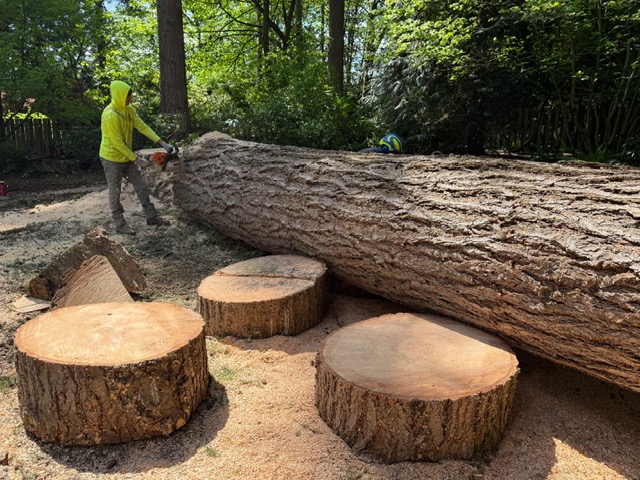
Tree size, nearby structures, and access all shape the work. These photos from our site show why each project starts with its own plan.
Have a question about your tree?
Let's talk about your property.
Tell us what you need, where the tree is, and any access concerns. We'll help you take the next step.
Explore more: Our tree services Areas we serve Tree care articles
Updated October 27, 2026. Answers provide general planning guidance; recommendations and project scope depend on an assessment of your property.