

The stump is gone, but a mound of wood chips is not the same thing as a finished lawn. If you are wondering what to do after stump grinding in Everett, start with the end result you want: grass, a planting bed, a replacement tree, or space for a future project. Each goal needs a different conversation about cleanup and preparation.
This guide helps homeowners turn that conversation into a clear plan. It covers the decisions to make with your contractor, useful checks before landscaping begins, and common questions about the old stump area. The horticultural guidance links to university-extension resources; the project checklists are practical planning tools, not a substitute for an on-site assessment.
1. Confirm what the stump-grinding service includes
Start by separating the work you can see from the work you expect. Ask your contractor to identify the grinding area, the planned finished level, and any limitations caused by access or nearby features. Do not use the word “removal” as a substitute for a written description of the work. Western Hemlock has separate information about stump grinding and stump extraction; discuss which approach fits your intended use.
Grinding does not necessarily eliminate the surrounding root system. Iowa State University Extension notes that old roots and grinding debris can complicate planting at a former tree site. That is why a replacement tree or a structure needs its own site review rather than an assumption that the whole area is clear. Read the extension guidance on replanting.
Ask for an answer to one simple question: What will this space look like when your crew leaves? A useful answer distinguishes retained grindings from hauled material, identifies any soil delivery, and states whether seeding, sod, planting, or follow-up visits are included. Keep that answer with your estimate so everyone is working toward the same finish.
2. Make the first site checks before starting the next project
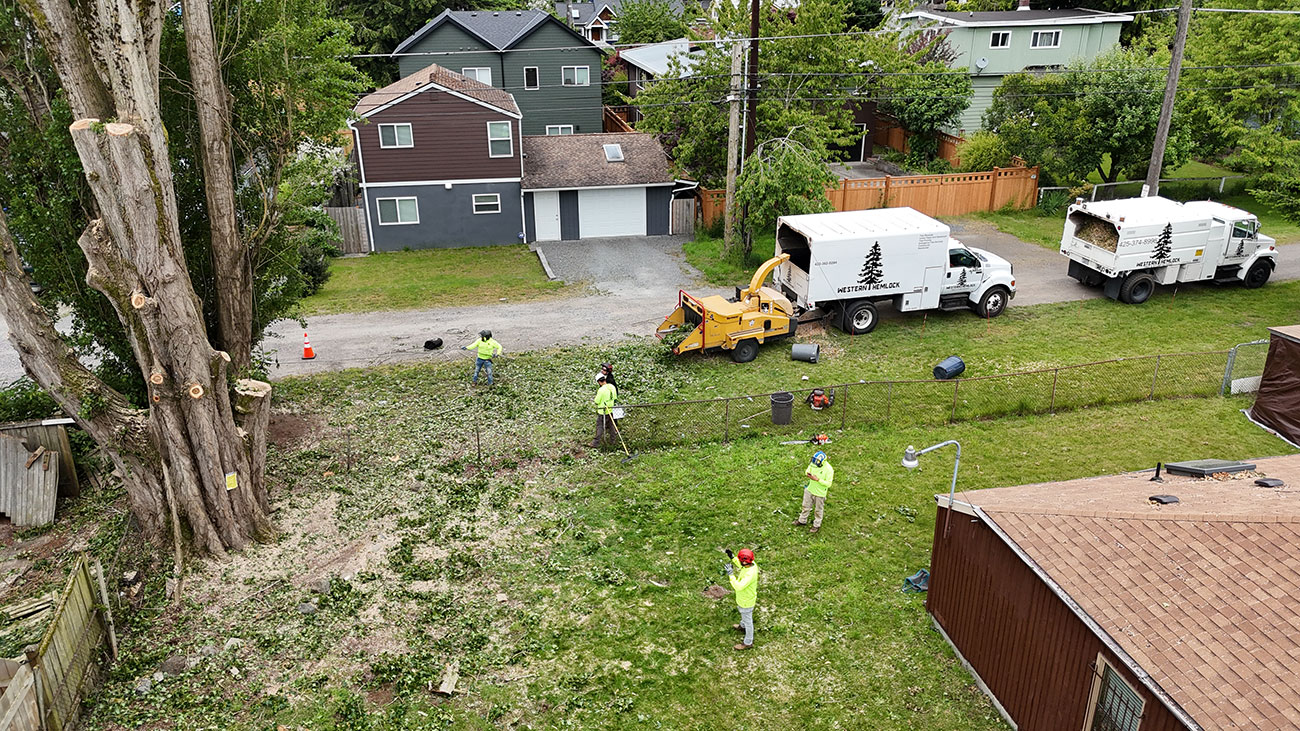
Arrange a brief handoff with the crew or the person managing the work. Ask them to point out the treated area and anything they recommend leaving undisturbed. Take overview photos from a walkway or another clear position. Include the yard entrance, nearby planting, and the boundary between the repaired area and the existing lawn. These photos give you a useful reference if you have questions later.
Keep children and pets out of unfinished work areas. Do not investigate a concern by digging around an unknown pipe, cutting a root, or driving a stake into the ground. Ask where any temporary barrier can be placed without disturbing buried features. Before mowing the area, check with the contractor that it is ready for ordinary yard use.
Do not assume the earlier work clears future digging
Before additional excavation or planting, coordinate an appropriate utility locate. The Washington Utilities and Transportation Commission says to contact 811 at least two business days before digging. Confirm the required responses and safe-to-start conditions for your project; the passage of two days alone is not your clearance. Check Washington’s official digging guidance.
Public locates do not cover every privately owned line. Irrigation, an outbuilding supply, or other private facilities may need separate identification. Share what you know and ask who will arrange the necessary locating before work proceeds. WA 811 explains homeowner and private-facility considerations.
3. Decide what to do with the wood chips and grindings
Choose between keeping suitable material for a specific landscape use and arranging removal. Do not keep a large pile simply because you have not decided where it should go. Ask the crew what material is present and whether it is practical to separate, relocate, or haul. Agree on the destination before a driveway or access route becomes your unplanned storage area.
Surface mulch and planting soil have different jobs
Washington State University Extension describes arborist wood chips as a useful surface mulch around woody plants. It also distinguishes varied, coarse chips from uniformly fine sawdust. Stump grindings can include soil and fine particles, so do not assume they are equivalent to a clean load of branch chips. Evaluate the material and the planting area before deciding to reuse it. See WSU’s wood-chip mulch guidance.
The nitrogen issue depends on placement. University of California guidance distinguishes wood used on the soil surface from wood incorporated into the root zone: mixing fresh wood into soil can tie up nitrogen during decomposition. That does not mean all wood-chip mulch harms established plants. Keep the distinction clear when someone proposes covering a chip-filled hole with seed or using grindings as planting soil. Read the explanation of mulch and soil nitrogen.
For your estimate, specify the outcome rather than just writing “cleanup.” Do you want surplus grindings hauled away, a selected amount left in an agreed place, or preparation for a separate landscaper? Ask whether loading, transport, and disposal are part of the quote. A clear decision now makes the next stage easier to organize.

4. Prepare the soil before planning grass or a new bed
A tidy surface can hide an unsuitable growing layer. Iowa State University Extension recommends removing grinding debris from the area being prepared for grass and addressing the soil and grade before establishing turf. A thin layer of soil over a deep mass of wood is not the same as preparing a proper seedbed. See its lawn-repair guidance after stump removal.
Have the person restoring the area explain what will be removed, what soil will be used, and how the finished level will meet the adjacent yard. Ask about drainage near the house, a walkway, or a fence. Do not approve a change in grade solely because it makes the stump area look flat in a photograph.
Finished compost and fresh grindings are not interchangeable. Oregon State University Extension discusses compost as a soil amendment for lawn preparation, not as a reason to fill every planting area with undecomposed wood. Ask whether an amendment is needed for your soil and intended planting rather than choosing a mixture by guesswork. Read OSU’s guidance on using compost.
Choose seed or sod around a care plan
Tell the landscaper how the repaired area will be used, how much light it receives, and whether you can keep traffic off it during establishment. Ask which grass is suitable and what preparation is needed. The practical choice is not simply which option looks green sooner; it is which option you can maintain successfully.
OSU’s lawn-establishment guidance emphasizes keeping a new seedbed moist without waterlogging it. Follow a plan suited to the weather, soil, and grass rather than watering on an unchanging schedule. Soil tests can guide fertilizer decisions; adding extra fertilizer does not correct an unsuitable planting layer. Review OSU’s establishment guide and regional natural-lawn-care advice.
In an Everett yard, base the schedule on actual ground conditions. If access is muddy or the prepared area is holding water, ask what needs to happen before planting proceeds. Request written instructions for watering, mowing, traffic, and any return visit. A calendar date alone cannot confirm that the site is ready.
5. Review the location before planting a replacement tree
A new tree does not automatically belong in the center of the old stump. Iowa State University Extension recommends a new planting location when possible because remaining roots, altered soil, and some disease or pest issues can make the original spot difficult. Moving the planting position is often worth discussing before paying for extensive preparation of the old one.
Ask the arborist to explain the proposed tree’s mature size, its relationship to buildings and utilities, and any concern about the former tree. Bring your preferences for shade, privacy, flowers, or an open lawn. Ask for a planting location and care plan that fit those goals. Do not treat a generic waiting period as proof that a particular site is suitable.
For broader preparation, see our stump-hole backfilling and lawn-restoration service information. Confirm the specific planting and finishing tasks in your own estimate.
6. Know what to watch and when to request a follow-up
Keep your completion photos and check the area as it returns to normal use. Contact the contractor about a developing depression, persistent standing water, exposed material, or a finish that differs from the agreed scope. Describe what changed, when you noticed it, and whether it affects access. A dated photo is more useful than guessing about the cause.
Mushrooms need context, not an automatic treatment
University of Maryland Extension explains that mushrooms can grow from buried dead roots or wood, even when no wood is visible at the surface. Their presence alone does not show that the grinding was unsuccessful. Mushrooms on a nearby living tree or its roots warrant a different assessment because some fungi cause wood decay. Do not assume an unidentified mushroom is safe to eat; keep children and pets from eating it. Read the extension guidance on lawn mushrooms.
If you see new woody shoots, ask for identification before treating them. Do not pour salt, fuel, or a homemade chemical mixture into the area. Likewise, do not cut nearby roots to solve a surface problem without checking which tree they belong to and what work is appropriate.
7. Compare the complete job, not just the grinding price
Two estimates can describe very different outcomes. One might leave material in place for you to manage; another might include hauling and soil work. Compare the written scope line by line before comparing the total. A lower figure is not directly comparable when the finishing work is missing.
| Part of the project | What to confirm |
|---|---|
| Grinding | Which stump and area are included, and what limitations apply? |
| Access and locating | Who coordinates access, public utility responses, and any private locating? |
| Material handling | What stays, what is hauled, and where will retained material go? |
| Soil and finish | Are soil supply, grading, and restoration included or quoted separately? |
| Planting and care | Who handles seed, sod, replacement planting, watering, and follow-up? |
For a useful estimate request, send the property address, photos of the stump and surrounding yard, the narrowest access point, and your preferred finish. Mention known irrigation, private lines, gates, steps, and features you want protected. Share these details before the visit so the conversation can focus on your actual project.
A simple homeowner handoff checklist
- Before work: Agree on access, locating responsibilities, the grinding scope, and material handling.
- At completion: Review the work area, take photos, and record any agreed next steps.
- Before landscaping: Confirm soil preparation, intended use, and any additional locating or approvals.
- During establishment: Follow the care instructions and report changes rather than improvising repairs.
The address matters more than a general neighborhood assumption. For properties in Riverside or View Ridge–Madison, send the same site details as you would for any other Everett property. Do not assume an alley, shared driveway, or neighboring yard is available for equipment; confirm permission and access in advance.
Frequently asked questions about stump-grinding aftercare
What should I do first after stump grinding?
Review the finished area and agreed scope with the contractor. Confirm what remains, what will be hauled, and whether soil or lawn restoration is included. Keep people and pets away from unfinished areas, and arrange the necessary checks before additional digging or planting.
Can I plant grass directly into stump grindings?
Do not use a bed of fresh grindings as the growing layer for a lawn. Remove the excess woody material from the area being prepared, address soil and grade, and choose seed or sod with a suitable establishment plan.
How long should I wait before planting?
There is no single waiting period for every project. The intended plant, remaining wood, soil preparation, and site conditions matter. Ask for an assessment of readiness rather than relying on a fixed number of days after grinding.
Can I reuse the chips as mulch?
Suitable coarse material may be useful as surface mulch, but stump grindings can contain soil and fine sawdust. Check the material and intended use. Do not confuse a surface mulch with a root-zone soil amendment or mix fresh grindings into a new planting bed by default.
Can I plant a new tree in the exact same spot?
A different planting position is generally preferable. Remaining roots, altered soil, and the reason the old tree was removed can affect the new tree. Have the location and preparation reviewed before choosing a replacement.
Are mushrooms after stump grinding a sign of a problem?
They may be feeding on buried dead wood. Mushrooms alone do not prove the job failed, but fungi on a nearby living tree or its roots deserve evaluation. Do not eat unidentified mushrooms, and prevent children and pets from eating them.
Does stump grinding include hauling and lawn repair?
Only when those tasks are included in the agreed estimate. Confirm grindings removal, soil delivery, grading, seed or sod, and aftercare separately. Ask for a description of the finished area before approving the work.
Do I need another utility check before digging or planting?
Confirm the locate requirements for the new work before disturbing the ground. Earlier grinding does not establish that a later excavation is clear. Contact 811 as required, check utility responses, and arrange identification of private facilities when needed.
Can I build a patio or fence over the old stump area?
Do not assume a ground stump area is ready for construction. Give the proposed location and project details to the qualified contractor responsible for the structure. Ask them to assess preparation, remaining wood, utilities, and applicable requirements before building.
What information should I send for an Everett stump-grinding estimate?
Send your address, photos of the stump and work area, access details, known utility concerns, and your intended finish. Say whether you want grindings hauled away and whether lawn restoration or replacement planting is part of the project.
Plan your next step with Western Hemlock
Whether the stump is still in place or you are planning the landscape afterward, start with a clear description of the result you want. Explore our Everett tree services and ask which grinding, hauling, and restoration tasks fit your property.
Request a free estimate or call (425) 374-8996. Share the stump photos and access information with your request so the team can discuss the scope and current availability.
General homeowner planning information. Site conditions, utility requirements, and the agreed estimate govern individual work. The linked university-extension and Washington utility resources provide further reading; their inclusion does not imply endorsement of Western Hemlock.