If you are noticing evergreen trees turning brown in Snohomish County, the most useful first question is: Which part of the tree is changing? A few patches deep inside the branches tell a different story from a newly brown top or a canopy that is steadily thinning. Before ordering a treatment or scheduling removal, take a closer look from a safe place and record what you see.
Evergreen conifers do not keep every needle forever. Washington State University explains that older foliage is shed periodically, and western redcedar can show a conspicuous seasonal change. That is different from assuming that all browning is harmless. Read WSU’s explanation of natural needle loss.
This guide is for homeowners in Everett, Lake Stevens, Mill Creek, and surrounding Snohomish County communities. It explains useful clues, practical next steps, and questions to ask an arborist. It focuses on evergreen conifers; first confirm the plant’s identity if you are unsure what kind of tree you have.
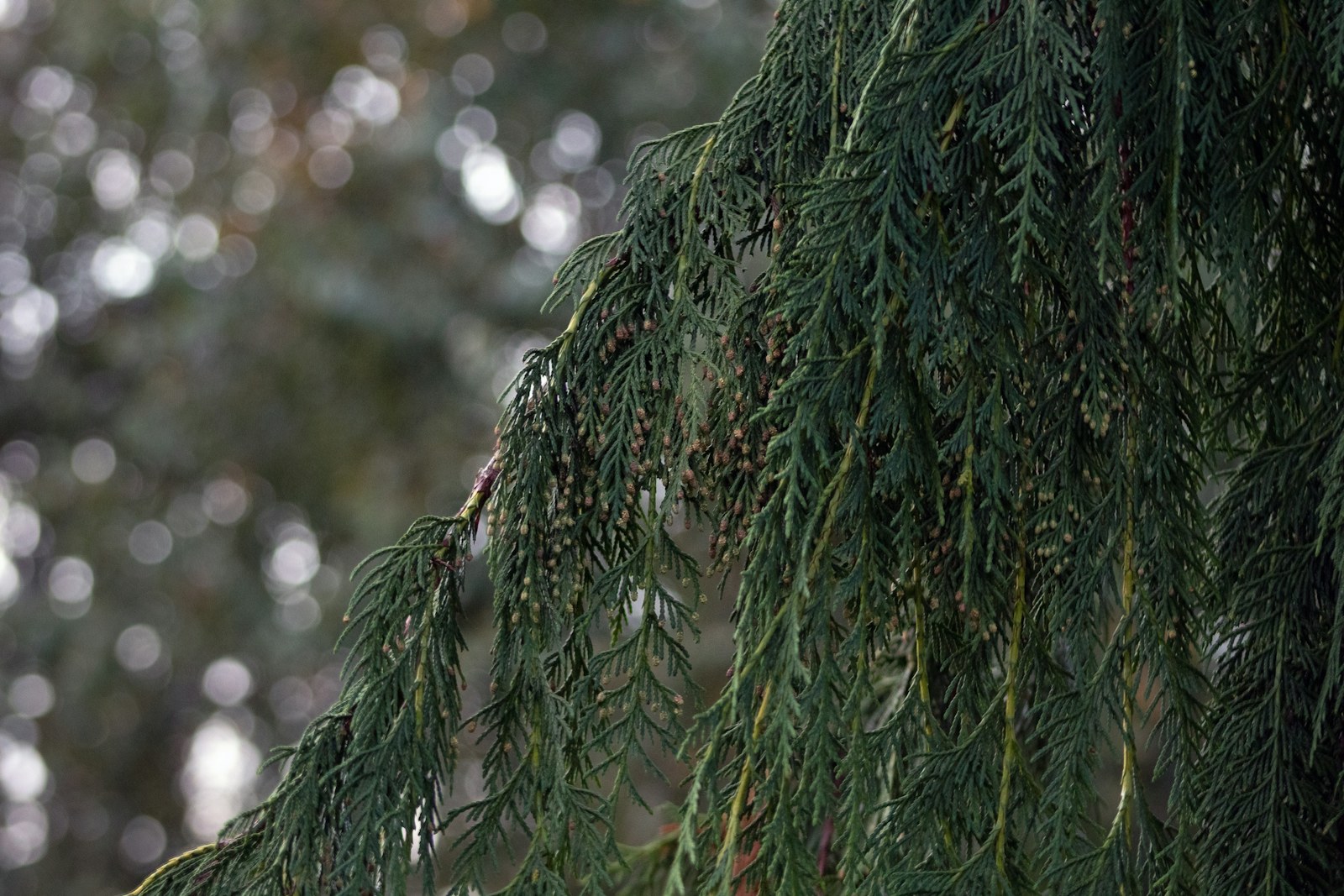
Featured photograph: evergreen conifer foliage by Joshua Ralph on Unsplash. It is a reference image, not a diagnosis of the pictured tree.
1. What seasonal needle shedding can look like
Look at the age and position of the affected foliage. In typical cedar flagging, older growth inside the canopy turns brown while the current season’s growth at the branch tips stays green. WSU describes this change becoming noticeable in late summer and fall. Stress, including dry conditions or disturbed roots, can make flagging more pronounced. See WSU’s cedar flagging fact sheet. For another explanation of inner foliage loss and green branch tips, see WSU Extension’s seasonal evergreen guide.
Use that description as a comparison, not a diagnosis. When you call for advice, explain whether the change is on the inner parts of many branches or concentrated in a particular section. A sentence such as “the small brown sprays are behind green tips throughout the tree” is more useful than “my cedar is dying.” If you cannot see the pattern clearly from the ground, say that too.
Plant identity matters. A common name such as “cedar” can be used loosely, and a photograph of a different species may be a poor comparison. Include a whole-tree view and an accessible foliage view with your inquiry. Keep the original image files so details are available if the person reviewing them needs a closer look.
2. Compare the pattern before deciding what to do
Oregon Department of Forestry distinguishes normal loss of older interior redcedar foliage from changes such as top dieback and crown thinning. Its regional guidance also describes decline as potentially involving several factors. Use the following table to organize observations; it is not a pass-or-fail safety test. Read the western redcedar decline fact sheet.
| What you notice | What to record | Next step |
|---|---|---|
| Older inner foliage browns; outer tips remain green | Species, season, and whether this resembles previous years | Compare with seasonal shedding; ask if uncertain. |
| Outer tips, a whole branch, or the top changes color | The location and whether the affected area is increasing | Arrange an assessment of the cause. |
| The canopy looks thinner than before | Dated photographs taken from a comparable viewpoint | Share the change and site history with an arborist. |
| A hanging limb, fresh split, or moving root area | Only what is visible from a safe location | Keep clear and seek prompt help. |
3. Other reasons an evergreen may turn brown
Water stress can have a delayed effect
A tree’s appearance today does not necessarily reflect only this week’s weather. WSU’s Backyard Forestry in Western Washington notes that drought injury may not become apparent until a later growing season and identifies western hemlock and western redcedar as susceptible species. Recent rain therefore does not rule out earlier stress. It also does not prove that stress is the cause of your tree’s symptoms. Read the WSU forestry guide (PDF).
Give your arborist a timeline: when you first noticed the change, whether irrigation was interrupted, and whether the tree was planted recently. If you do not know, write “unknown” rather than estimating a history that could send the assessment in the wrong direction.
Wet soil and root problems can affect the canopy
More water is not always the answer. WSU’s hemlock guidance explains that Phytophthora root rot is associated with poorly drained or flooded sites and can cause yellow or brown foliage and branch dieback. Those symptoms alone do not establish that disease is present. Read the hemlock root-rot guidance.
Mention persistent puddling, a changed downspout outlet, or an irrigation leak when requesting help. Ask how the soil and root area will be assessed. Do not start trenching around an established tree to “fix drainage” before the work and its effect on roots have been reviewed.
Several stresses may be involved
Oregon State University reports that drought can leave conifers more vulnerable to insects and disease, while some declining trees show no pest damage. It recommends confirming the cause and avoiding additional root disturbance, compaction, and drainage changes. A product chosen only because the foliage is brown may miss the underlying problem. Read OSU’s guidance on conifer drought damage.
Include recent patio work, fencing, vehicle access, and landscape changes in the conversation. These details help establish what needs investigating; they do not establish who or what caused the problem.
4. Build a useful photo and observation record
WSU’s plant diagnosis guidance emphasizes combining observations with history; symptoms in the canopy may originate elsewhere, including the roots. Sometimes photographs are insufficient and a closer examination or suitable sample is needed. Let the professional tell you what additional information is useful before collecting or cutting anything. Learn how plant problems are investigated.
Here is a practical way to prepare your request:
- Label the tree. Use a simple description such as “large evergreen beside the back gate.” If several trees are involved, number them in your notes and photos.
- Take a whole-tree view. Include the crown and its surroundings where possible. Use a safe viewpoint; do not walk beneath a suspect limb for a better angle.
- Show the affected growth in context. An accessible branch view should include nearby green foliage, not just an isolated brown fragment. Use your camera’s zoom when helpful.
- Write a short timeline. Separate the date you noticed the change from the date you know it began. Mark older photographs if they show a useful comparison.
- List the question you want answered. For example: “Is this seasonal shedding, and should we schedule an assessment?” This makes the next conversation focused and practical.
A simple note is enough. There is no need to identify a disease, calculate a percentage of canopy loss, or purchase a treatment before making contact. Your task is to describe the concern clearly.
5. Separate foliage concerns from urgent tree hazards
Tree health and structural risk require different questions. WSU recommends considering the potential impact on people and property when a tree is declining. Tell the assessor about occupied spaces and nearby structures, even when your original concern is foliage color. Read WSU’s Assessing Tree Health.
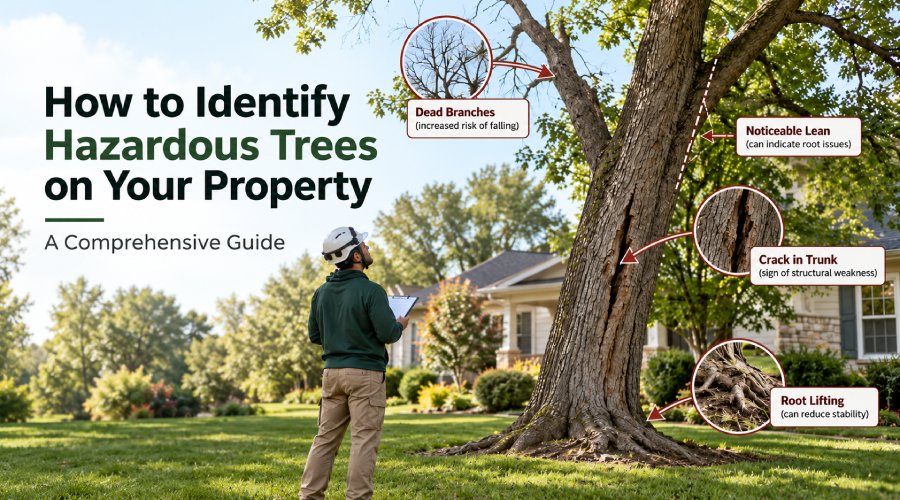
ISA identifies hanging branches, cracks, and root-area soil movement as warning signs. Keep people and pets clear of a new lean with lifting ground. Stay away from downed lines or tree parts touching lines; contact the utility, and call 911 for an immediate threat to life. See ISA’s tree-risk guidance (PDF).
When contacting Western Hemlock, explain any immediate concern at the start of the call. Ask about current availability and the appropriate next step. Do not delay a utility or emergency call while waiting for a tree-service reply. You can also review our emergency tree services.
6. Choose the next step before choosing a treatment
Ask for a site-specific watering plan
Discuss moisture and drainage before increasing irrigation. Ask where and how to check the root area, whether watering is needed now, and what should change with the season. A plan should also tell you when to stop or seek another assessment. Avoid treating a fixed schedule from an unrelated property as instructions for your own tree.
For a newly planted tree, bring the planting date and any care instructions to the conversation. For an established tree, mention nearby changes as well as routine irrigation. Those are different situations, and the same household may need more than one care plan.
Review mulch and protect the root area
ISA explains that correctly applied mulch can conserve moisture and improve soil conditions, while excessive mulch or material against the trunk can cause problems. Check what is already present before adding another layer. Wet sites need particular care because additional mulch can slow soil drying. Read ISA’s proper mulching guidance (PDF).
If landscaping is planned, put tree protection on the agenda before equipment arrives. Ask the arborist and landscape contractor to agree on access, material storage, and any areas to avoid. Keep their agreed instructions with the project estimate so the crew has the same information you do.
Set a purpose for pruning, fertilizing, or spraying
Ask what each proposed task is intended to achieve. “Improve the color” is less useful than an explanation of the identified problem, the recommended action, and how the result will be checked. OSU specifically advises against fertilizing during drought because it can increase water demands. A browning tree does not automatically need fertilizer or pesticide treatment.
For pruning, ask the assessor to distinguish dead wood from living growth and explain the scope. Review our tree pruning services and deadwood removal information when discussing the recommendation. Do not use a general service description as a prescription for an unassessed tree.
7. Make the arborist visit lead to a clear plan
Bring your observations, then ask for an explanation you can use after the visit. A practical conversation should cover the concern, what remains uncertain, the next action, and the follow-up. If you need a written report, mention that when booking and confirm its scope and fee separately from any estimate for tree work.
- What did you observe? Ask the arborist to point out the findings that support the recommendation.
- What is still uncertain? Ask whether additional inspection or testing would change the decision.
- What needs attention first? Separate any immediate safety work from routine care or monitoring.
- What are my options? Ask about the purpose, limits, and expected outcome of each reasonable approach.
- How will we review progress? Agree on what you should record and when to make contact again.
For example, if you are comparing two proposals, give both providers the same tree identification and photos. Ask each to describe the recommended work in writing. This makes it easier to compare the scope instead of assuming that two differently worded estimates include the same service.
Keep the follow-up manageable
After an assessment, use a short log with four entries: date, photograph number, observed change, and agreed action. Keep observations separate from guesses. “The same upper branch looks browner in this week’s photo” is an observation; “the whole tree has a particular disease” is a diagnosis that needs evidence.
If a recommendation involves replacement planting, ask how the species will fit the actual site. WSU’s forest-stewardship guidance emphasizes matching trees to soil, moisture, and local conditions. Discuss the available space and long-term care as part of that decision. Read WSU’s backyard forest stewardship guidance.
For professional help, explore our ISA-certified arborist services and arborist report information. Homeowners can also find local service information for Everett, Lake Stevens, and Mill Creek.
Frequently asked questions about browning evergreens
Is it normal for evergreen trees to turn brown in fall?
Some older foliage naturally changes color and sheds. That does not mean the entire tree should turn brown. Identify the species and compare the affected growth with the rest of the canopy before deciding what the change means.
What does normal cedar flagging look like?
Typical seasonal cedar flagging affects older interior foliage while the current year’s branch tips remain green. If the pattern is unfamiliar, much heavier than before, or includes dying outer growth, arrange an assessment instead of assuming it is normal.
Can drought damage appear after rain returns?
Yes. Tree damage from a dry period can become visible later. Include earlier watering history and site changes in your assessment request; a recent rainy week does not explain the tree’s entire condition.
Should I give a brown evergreen more water?
Check soil moisture and drainage before increasing irrigation. Ask for a watering plan that fits the tree and site. Extra water is not a universal treatment, particularly where the ground stays wet.
Does browning mean my tree has root rot?
No. Browning alone cannot identify root rot or its cause. A professional may need to examine the site, roots, and other symptoms, and sometimes arrange diagnostic testing before recommending treatment.
Should I fertilize or spray a browning tree?
Establish the cause first. Ask what condition a proposed product will treat and what evidence supports that choice. Fertilizer and pesticide applications should not be automatic responses to foliage discoloration.
Should I prune away every brown branch?
Ask which parts are dead and whether pruning is needed. A branch with old brown interior foliage can still carry live outer growth. Avoid a blanket cleanup that removes living foliage, and leave elevated or hazardous work to qualified professionals.
Does a brown evergreen need to be removed?
Color alone does not determine removal. Ask the arborist to explain the tree’s health, structural condition, nearby people or property, and management options. Request a separate explanation of any urgent work.
What photos should I send with my tree assessment request?
From safe ground, photograph the entire tree, the affected area with surrounding green growth, and the tree’s setting. Add the date you noticed the change and a short note about recent watering or landscaping work. Skip any view that requires approaching a hazard.
When is a tree concern an emergency?
A hanging limb, a fresh major split, or ground movement with a new lean needs prompt attention. Keep people away. Stay clear of downed lines and tree parts touching power lines; contact the utility, and call 911 for an immediate threat to life.
Get a clear next step for your evergreen tree
Share your property address, a few safely taken photos, and a short description of the change with Western Hemlock Tree & Stump Service. Ask about an arborist consultation and whether a tree-work estimate, written report, or another type of assessment fits your needs.
Contact Western Hemlock or call (425) 374-8996. Tell us about any urgent concern first, and confirm the visit scope and current availability when scheduling.
This guide provides general homeowner information. The linked university-extension, forestry, and ISA resources support the tree-care discussion; an individual tree needs assessment in its own setting.